What will your box have to prove in 2027? Explore the corrugated packaging trends FMCG brands need to know about
By BoxWay Packaging Group, 7 October 2026
Picture a common scene; a shopper orders three jars of pasta sauce online from their favourite retailer…
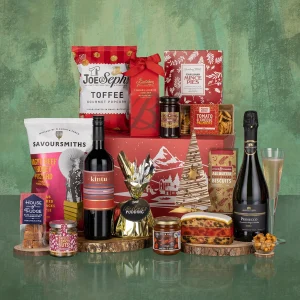 The online purchase is smooth enough, but three jars arrive in a box big enough for twelve, packed out with paper fill to cushion impacts. The product arrives in pristine condition, but the brand has paid to ship air and made a wasteful first impression.
In the golden age of sustainability, where lightweighting, circularity and innovative design are taking centre stage, packs like that will be much harder to justify in 2027.
We ask an awful lot of packaging. For even the simplest designs, every box must survive a warehouse and a delivery van, catch a shopper’s eye when it’s on shelf, fill a pallet neatly, be convenient for the consumer at the point of use, then feed back into the material recycling loop.
With all these growing demands, what should FMCG brands be thinking about now to make sure their packaging is ready for 2027? Below, we explore the corrugated packaging trends for 2027, and what they say about the future of packaging design.
Packaging that does more with less
 Lightweighting has been on packaging agendas for years, but the newer pressure is on space optimisation. The EU Packaging and Packaging Waste Regulation (PPWR) has been enforced from August 2026. Among the next phases of the legislation, from 1 January 2030, grouped, transport and e-commerce packaging on the EU market can be no more than 50% empty space, including void fill.
An online brand that packs everything into standard box sizes, regardless of what is being shipped, will struggle to meet it. A wider range of better-fitting sizes, or inserts that hold the product in place, closes the gap without the need for excess void fill.
Published research suggests that oversized online deliveries carry an astonishing 85 million cubic metres of air to UK homes every year, contributing more than 86,000 metric tonnes of unnecessary CO2 emissions annually. For high-volume brands, trimming just a few millimetres per dimension can make more efficient use of space, material and energy.
In fact, at BoxWay, we would go further and say that weight is the wrong headline measure for a pack. A lighter board grade that lets more product break in transit costs more in replacements and carbon than it saves. On a 2027 packaging scorecard, we would put damage rate first, pallet fill second and material weight third, though all have an important role to play.
The obvious pushback is that EPR fees are charged by the tonne, so every gram carries a cost. That’s true, but a damaged delivery still means paying for the packaging twice. It also means a second product, a second van trip and a customer less likely to reorder.
Sustainability that goes beyond the material itself

Corrugated starts from a strong position. In Europe, industry non-profit organisation FEFCO reports that recycled paper provides 88% of the raw material for new corrugated boxes, and the fibres can be recycled more than 25 times with no significant loss in quality.
Choosing corrugated is only the first decision. In 2027, expect customers, retailers and regulators to judge the whole life of a pack, from production and transport to protection and disposal.
The UK’s EPR scheme puts a price on those choices. Under the Recyclability Assessment Methodology (RAM), red-rated packaging pays 1.2 times the base fee in 2026/27. That rises to 1.6 times in 2027/28 and double from 2028/29.
Plastic windows on fibre packs are one of the easiest components to design out. On our four-can gift box for Left Handed Giant Brewing Co, die-cut apertures display the can artwork with no window film. We also supply FSC®-certified board on request.
Then there’s the wording printed on the box. EU consumer law bans generic claims such as ‘eco-friendly’ or ‘green’ without specificity or proof of recognised excellent environmental performance. Plus, under the Green Claims Code, the UK’s Competition and Markets Authority can now fine businesses up to 10% of global turnover for consumer law breaches, including misleading sustainability claims.
Packaging as part of the customer experience
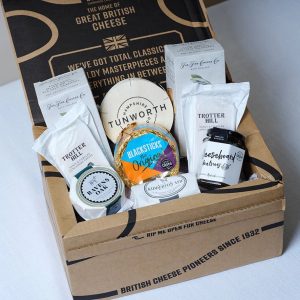
For direct-to-consumer (D2C) brands, the outer box is often the first thing a customer touches. When research shows that 43% of consumers feel frustrated with the retailer when an order arrives in an oversized box, it becomes clear that an optimised packaging design has a direct impact on how a shopper feels.
But impact doesn’t always have to mean complexity. Our latest bespoke corrugated packaging projects show what we mean.
- TOAST’D’s gift set securely holds each component, and the box doubles as a serving tray.
- Butlers Farmhouse Cheeses‘ D2C pack is printed inside and out, with a crash-lock base and a tear strip for easy opening.
- Barking&Mad’s dog bowl pack uses a single-colour design in water-based flexo inks, made in the UK to replace imported packaging.
For D2C packs, our advice is to spend the print budget where the customer looks first, which is often inside the lid. But in-store, retail-ready packaging designs have two audiences. Staff need to open and stack quickly, while shoppers need to spot the brand from the end of the aisle. Strong print on the front panel and a tear-off section that leaves a clean edge can serve both needs.
Smarter, more flexible packaging design
Shoppers love choice and variety, so FMCG ranges now change several times a year. A single brand might run a core range, two seasonal editions, a multipack and an online bundle within twelve months.
A shared footprint with different inserts reduces the number of cutting forms, board grades and stock lines, as does a design that works as both an e-commerce mailer and a retail case. Alongside this, digital print methods make short seasonal runs viable without tying up cash in printed stock.
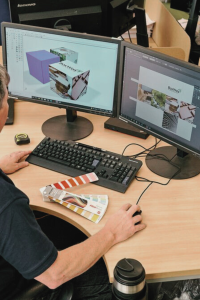
The most cost-effective time to fix a packaging problem is before the cutting form is made, and technologies such as photorealistic 3D visuals and digitally printed samples let brands check fit and function early. Our packaging services cover that design work alongside manufacture and delivery. For brand owners and their packaging converter partners, the expensive changes usually start with a product that is finalised before considering how it would be packed, stacked or shipped.
Performance and protection still come first
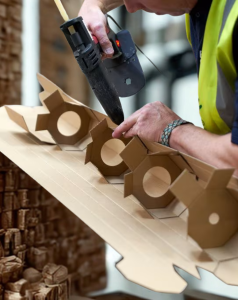
A crushed box sells nothing. Flute profile, board grade, reinforced corners and fitments all decide how a box copes in a damp warehouse. They also influence whether a parcel survives automated sortation and a potential drop from a van step.
A shelf-ready case must hold its stacking strength for weeks in a distribution centre. A parcel, meanwhile, travels alone through several sorting points, taking knocks a pallet does not. Transit testing, such as ISTA’s parcel procedures, shows how a design behaves before thousands of units go out.
We might first assume that appearance, efficiency and durability are pulling in different directions, but packaging excellence demands all three, which makes the expertise of a team like BoxWay so invaluable.
What should FMCG brands do now?
Readying for 2027 and beyond, there are six steps to ensure packaging is ready for whatever the future throws at it.
- Review current packaging formats and material use, pack by pack.
- Measure the empty space in e-commerce and transit packs against the PPWR 50% limit.
- Check how each pack performs in every sales channel, and where one design could serve two or more.
- Assess recyclability against the RAM ratings, and check every environmental claim made online or in sales literature against evidence you can produce.
- Ask whether a structural change, such as an insert or crash-lock base, could remove an unnecessary component.
- Speak to a packaging partner at concept stage for new products and campaigns.
What should you do next?
One of the most useful packaging reviews for any business can be done in one afternoon. Pull one of every pack type from the warehouse, open them on a table and handle them the way your customer, your retailer and your packing team do.
The weak spots tend to be obvious once they’re side by side. When you’ve found them, bring them to us. Our team will help you get your corrugated packaging ready for 2027, your way. Contact us today.